
In today's world, it's especially important to stay healthy - including in relation to digital media.
At these times, it's particularly worthwhile to pay attention to topics like “Digital Wellbeing”, “Online Wellbeing”, “Online Mindfulness”, and also “Internet Addiction”.
The internet offers fantastic opportunities and significant efficiency gains.
However, overuse can also occur. Depending on the extent, one might even speak of online addiction (or more specifically, gaming addiction, social media addiction, pornography addiction, smartphone addiction, etc.).
As a digital agency, it is important to us that digital media are used responsibly. That's why we have listed 10 simple tips here that can help with digital well-being and digital detox.
How do you manage your digital well-being? Do you have your phone usage under control? What are your life hacks?
Share your recommendations in the comments below.
10 Digital Detox Tips
In the following 10 simple steps, onlineKarma, in collaboration with George Peterburs from 'be in resonance', explains how you can use digital media mindfully. Here's an overview:
#1 Smartphone outside the bedroom
#2 Eliminate notifications
#3 Switch off for 12 hours
#4 Grayscale
#5 Home Screen
#6 Measure your digital dose
#7 Delete social media apps from your smartphone
#8 Monotasking instead of Multitasking
#9 Offline Zones & Times
#10 Digital Detox Day
#Bonus Tip
#1 Charge Your Smartphone Outside the Bedroom
Get a separate alarm clock. This way, you can wake up without your attention being immediately drawn to your smartphone while still in bed.
onlineKarma Tip: Get a traditional alarm clock again. ⏰

Source: Giphy
#2 Eliminate Notifications
Reduce (digital) distractions to the absolute minimum.
Avoid notifications on your (locked) smartphone screen, and do without push notifications, live updates, flashing lights, and sounds.
Push notifications (e.g., for every new email) on your work PC are also not recommended. For emails, use the 'mailbox rule.' Empty your email inbox similarly to a physical mailbox. Limit checking emails to, for example, once daily (for personal use) and every 3 hours (for business).
onlineKarma Tip: iPhone Guide, Android Guide ✉

Source: Giphy
#3 Switch off for 12 hours daily!
Go offline for 12 hours every day, for example, from 8 PM to 8 AM.
For 12 consecutive hours, disconnect from email, social media, and the internet. If you switch off later in the evening, then switch on later in the morning accordingly.
onlineKarma Tip: Reading a good book or attending a yoga class is also possible without a smartphone. 🧘♀️🧘♂️

Source: Giphy
#4 Choose Grayscale
Grayscale on your smartphone screen gives us more control over where we direct our attention.
The red dots that signal new messages and usually grab our attention no longer put us on alert.
onlineKarma Tip: iPhone Guide, Android Guide ⚙

Source: Giphy
#5 Home Screen for Tools Only
Reserve your smartphone's home screen for essential tools and apps that you use only briefly to complete a task or find specific information.
These include apps such as Calendar, Contacts, Maps, Camera , or Notes. Remove all other (time-consuming) apps from your main screen or move them into a dedicated folder.
onlineKarma Tip: 🔧

Source: Giphy
#6 Measure Your Daily Digital Usage
An app (such as 11 apps to help reduce screen time or Digital Wellbeing App) can inform you about your screen time from the previous day, how often you unlocked your device, and which apps you used the most.
onlineKarma Tip: Occasionally compare your screen time with friends. The figures can be quite surprising. 📊

Source: Giphy
#7 Remove Social Media Apps from Your Smartphone
If you are serious about reducing your smartphone usage, remove all social media apps from your phone. You can still access them on your computer if needed.
onlineKarma Tipp: Don't do that! 😉

Source: Giphy
#8 Monotasking Instead of Multitasking
At least once a day, consciously focus on a single activity for a short or extended period.
Eliminate all potential distractions; during this time, avoid receiving emails, text messages, or calls.
onlineKarma Tip: Relax and enjoy your favorite music with a refreshing drink. ☕

Source: Giphy
#9 Establish Offline Zones and Times
Set boundaries.
Establish zones and times that are completely free from digital interruptions. In your personal life, this ideally includes the bedroom, and perhaps also the kitchen or dining room (at least during meals). At work, the meeting room and the quiet room are ideal.
onlineKarma Tip: Allow yourself at least one hour of offline time before bed. This can significantly improve your ability to fall asleep. 🤗

Source: Giphy
#10 Dedicate One Day a Week to Digital Detox
Spend an entire day without using any digital devices or screens.
Store computers and smartphones, ideally completely switched off, in a secure location. Keep the television off, avoid watching movies, and refrain from listening to digital music.
onlineKarma Tip: How about a leisurely walk in the sun or a visit to the theater? 😍

Source: Giphy
Bonus Tip: Out of Sight, Out of Mind
This tip might seem almost too simple to be true, but it works. By making electronic devices invisible, you can better concentrate on your conversations or activities.
You can put away your laptop, cover the TV with a nice cloth, and hide your phone in a drawer or under a blanket.
Of course, you can also simply leave your phone at home sometimes, for example, when going to the bakery, jogging, or taking a walk.
Dr. Adam Gazzaley confirms: Keeping your phone out of sight improves your concentration, your ability to retain information, and helps reduce stress.
As a general rule: Reduce distractions:
Google on Digital Wellbeing
Google Digital Wellbeing: Digital technology enables connection, gives us the freedom to explore, and so much more. But it can also distract us from the things that we care about.
Internet Addiction
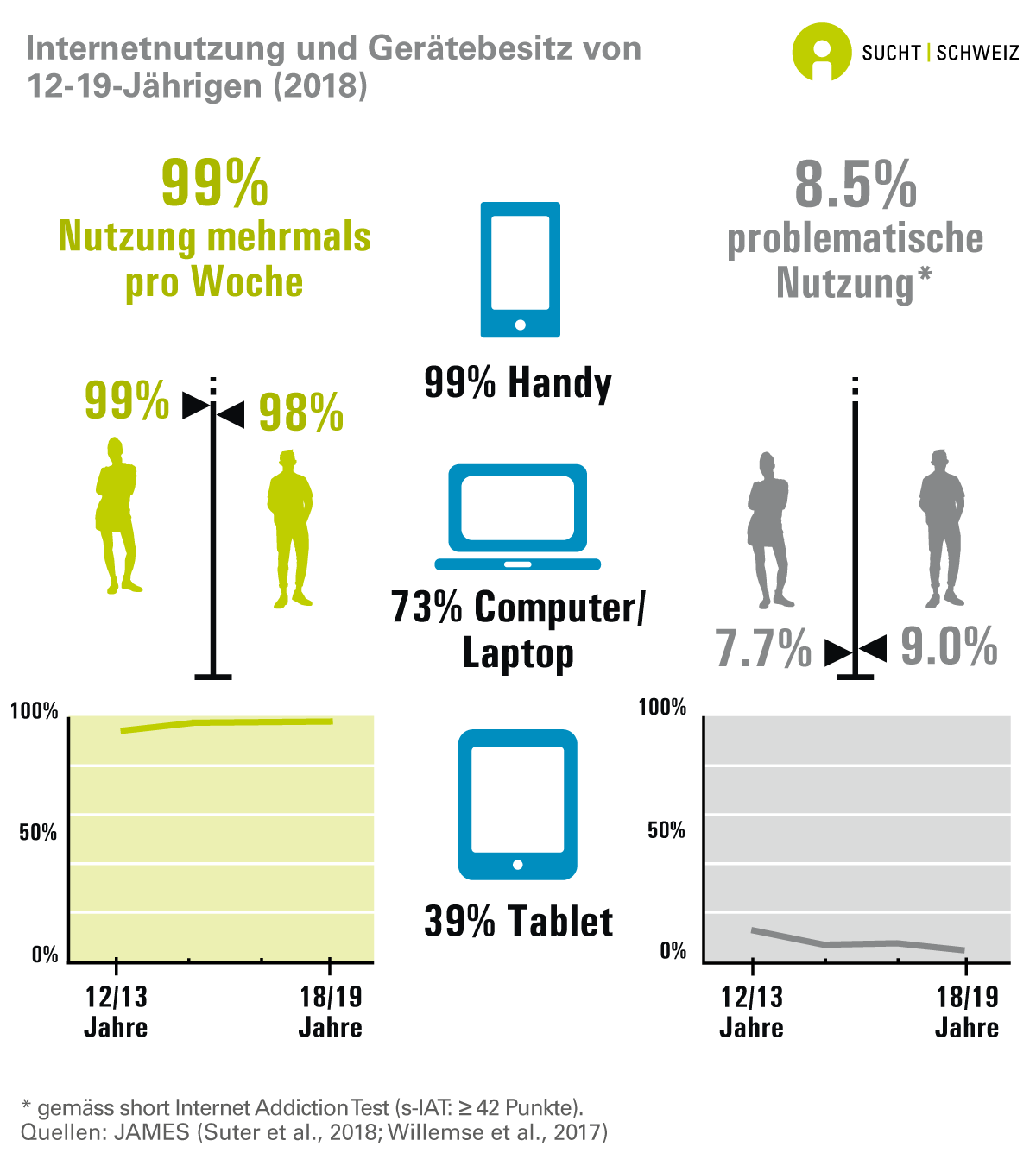
According to RADIX, 370,000 people in Switzerland already «have problems with their [internet] consumption.»
The consequences can include social isolation, mood swings, and difficulty concentrating. Additionally, digital addiction can lead to obesity (and related conditions like diabetes), as well as vision and sleep disorders.

Problematic Internet Use: Symptoms and Effects
According to the Federal Office of Public Health and SafeZone.ch, an individual with online addiction may exhibit one or more of the following signs:
The person can no longer control their internet use and spends progressively more time online.
The internet becomes the central focus of interest, leading to the loss of other or previous hobbies.
There is an overwhelming craving for the internet, and not using it leads to nervousness (withdrawal symptoms).
The internet continues to be used despite negative consequences.
An internet-addicted person withdraws from others, allowing relationships to deteriorate.
The individual stays online late into the night, disrupting their day-night rhythm and causing excessive fatigue.
Spending time online can also be a strategy to avoid unpleasant feelings or stress.
Work performance declines, and there is a risk of accumulating debt.
Health is negatively affected.
Difficulty disengaging from the internet once immersed.
Not all of these signs need to be present for online addiction. Furthermore, it cannot be diagnosed solely based on a specific daily internet usage duration.
Particular Appeal
According to the BAG, certain areas of the internet hold a particular appeal. These include, for instance, gambling, pornography, online communication (e.g., through social networks), online shopping, or video games.
Excessive internet use causes biochemical changes in the body that can lead to addiction. Similar to drug dependency, online addiction also results in changes in the brain's reward center, meaning that everyday rewarding situations are no longer sufficient for the addicted individual.
Adolescents have an increased risk of addiction because the brain region responsible for controlling behavior and emotions is not yet fully developed.
Women more often show excessive use of online communication, while men more frequently experience problems with excessive use of pornographic sites.
Internet Addiction: Prevention and Treatment
The online counseling service SafeZone offers an accessible service that can also be used anonymously. To prevent problematic internet use, promoting media literacy is crucial.
Perhaps meditation can help you. Become aware of your inner autopilot. Try it out, for example, with the free meditations from the Center for Mindfulness.
Call, chat, or email for free to contact Die Dargebotene Hand https://www.143.ch
Long-term Consequences of Excessive Internet Consumption
Online addiction can lead to impaired social relationships and academic or professional performance. Some forms of use can also bring significant financial problems. Physical health can also be harmed. For example, this can result in postural damage, problems due to disordered eating behavior, headaches and vision problems.
About onlineKarma
As a sustainable Digital Agency, we support companies, associations, and private individuals in achieving a successful online presence. onlineKarma stands for online marketing with impact. We are happy to assist with Content Marketing, SEO, SEA, Social Media Marketing, and more. Here is the overview of services.
You might also be interested in:
Sustainable Online Advertising Agency in Switzerland
For Families: The Internet Code of Awesome (EN)



What's the easiest way to protect your website and your personal data online? We have compiled 10 useful tips for greater web security.