

Are you as digital as the future?
By 2020, more people will own a smartphone than have access to running water or electricity*. This is a dramatic statistic and simultaneously highlights the extent of digitalization.
With digitalization, the marketing world is also fundamentally changing. Companies must adapt their strategies to the online world if they wish to thrive long-term.
Especially for younger generations, namely Millennials (Generation Y) and Generation Z (born between 2000 and 2015), social media already plays a fundamental role in purchasing decisions.
These changes present significant challenges for companies. However, they also offer a unique opportunity to successfully stand out in the market.

Convenience is More Important Than Price
New insights show that for most customers, convenience and brand loyalty are more relevant than price when making a purchase decision. Companies can leverage this understanding of new market conditions. If you offer customers a unique Customer Experience, it is very likely they will become long-term customers of your company – regardless of the price.
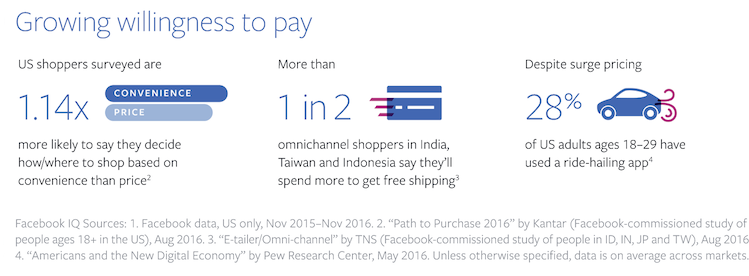
According to a recent Facebook IQ study, for customers, comfort is twice as important as price when shopping. Brands like Nivea succeed in retaining and engaging consumers across different life stages thanks to distinctive product design.
The price of products and services is therefore steadily losing importance due to digitalization. If a customer sees a shoe in a store, they can immediately check on their smartphone whether the shoe is available cheaper online or in another store. The same, of course, applies to e-commerce. A customer who is only interested in the price will find the cheapest shoe anyway.

Can Your Customers Reach You Easily Enough?
Customers are becoming increasingly demanding due to digitalization. 'Immediacy' and 'convenience' are essential to win over customers. This first means reaching customers where they already are: on social media, through brand pages, contact options, and customer communities. Additionally, a customer service that responds quickly and easily to customer needs is required.
Long phone calls and endless email exchanges are increasingly driving customers away. According to a Salesforce study, 89% of customers will not make a second purchase if they are dissatisfied with a company's customer service. Furthermore, more than 50% of customers are willing to pay more if the customer service is satisfactory.

Understand Your Customer.
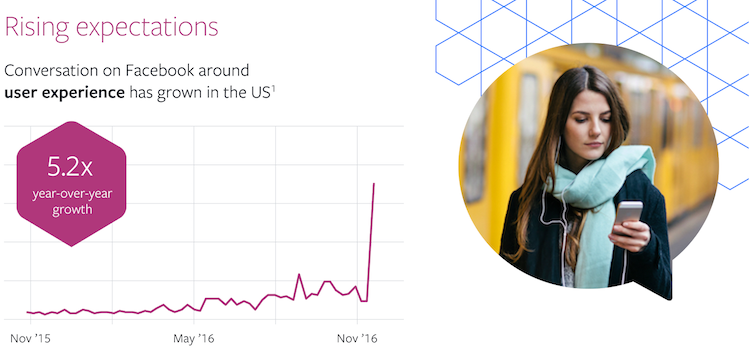
Companies that want to succeed in the market today and in the future must understand: The customer is at the center. All business strategies must be customer-centric. Otherwise, in a digital world, it's not possible to retain customers long-term. They will make their purchase with another company that understands their needs. Therefore, two concepts will increasingly need to be embraced by companies: User Experience and Customer Experience.
Source: Facebook IQ Study
User Experience (UX) - Offer the best possible user experience
User Experience (UX) is primarily about understanding the customer and their needs. Subsequently, efforts are made to create products and services that meet these needs and delight the customer.
UX plays a central role in all websites, apps, and programs. For example, before creating a website, it's crucial to understand how you want customers to navigate, how they prefer to navigate the page, what content they are looking for, and which design elements they find appealing. Too often, customers visit a website without taking action or completing a purchase. This is usually due to a poor User Experience.
Customers are increasingly less satisfied with websites that have poor usability or uninspired design. The Bank of America reported 45% more registrations on its website after incorporating UX guidelines into its portal.
Not considering UX is a luxury that companies can no longer afford. In the future, poor UX will very likely even cost some companies their existence.

Customer Experience (CX) - Create positive customer experiences
Customer Experience (CX) could be described as the big sister of UX. CX encompasses all experiences a customer has when interacting with a company.
CX covers the entire product lifecycle and all touchpoints between companies and customers. Here, too, customer service plays an important role in intercepting negative experiences. Social media should also not be forgotten. Customers are increasingly reading customer reviews on social media and letting the experiences of others guide their purchasing decisions. Customers who have a negative CX often vent their frustration on social media. Therefore, professional Social Media Management is essential.

More Connected Than Ever
The market research provider Gartner estimates that by the year 2020, there will be 20.8 billion connected devices worldwide. Each of these devices offers companies an opportunity to interact with customers or potential customers. But one must know how, especially regarding marketing. Furthermore, one must act quickly to channel this potential before competitors do.

Leverage Cross-Device Marketing
Google reports that nine out of ten customers already switch between different digital devices before making a purchase. This insight can help businesses improve their Conversion Rate (CTR). The Conversion Rate is the ratio between website visitors and completed purchases or transactions, and this figure is a key metric for evaluating the effectiveness of a company's marketing efforts.
Companies have shown that their Conversion Rate improved once they incorporated Cross-device Marketing. For example, Shutterfly, an American photo technology company, was able to increase its Conversion Rate by over 15%. Cross-device marketing involves delivering the right advertising content to the right user across various digital devices. Users are increasingly switching between devices like smartphones, tablets, or laptops. They might research a purchase on one device but often complete the actual purchase on another.
In its latest report on cross-device commerce, Criteo, a performance marketing platform, states that 31% of consumers use more than one device before completing a transaction.
Next Steps
Do you have questions about your Marketing Strategy or would you like to optimize and strengthen your marketing activities? We are happy to assist you. You can contact us here.
*PS: As a sustainable marketing agency, we are mindful of our actions, support NGOs like Helvetas or Doctors Without Borders, and are certified climate-neutral.