

Why are KPIs Important, and Why Should You Define Them?
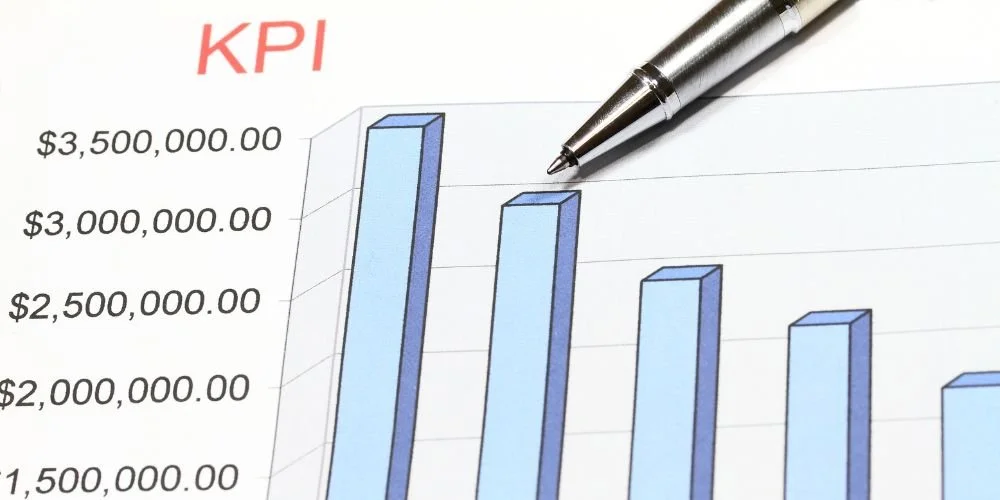
KPIs (Key Performance Indicators) are measurable values that show you whether you are achieving your marketing goals.
They reveal how successful your strategies are and where you can optimize them.
Without these clear metrics, it's difficult to objectively assess the impact of your marketing activities. Think of KPIs as signposts that help you keep track of your progress.
Why You Should Define KPIs:
KPIs ensure that you don't just hope your efforts are successful, but can actually measure them. They create clarity, focus your resources on the most important goals, and make your successes visible.
It's important to select only the KPIs that truly align with your goals. Too many or irrelevant KPIs can obscure what's essential and unnecessarily complicate your strategy.


How do I define the right KPIs for my business?
Selecting the right KPIs begins with a clear goal setting.
Do you want to increase your sales, boost brand awareness, or strengthen customer loyalty? Your KPIs should directly reflect these goals.
For an online shop, these could be, for example, Conversion Rate and ROAS, while content platforms place more emphasis on dwell time and engagement.
Steps to Selecting the Right KPIs:
Set specific and measurable goals, such as '20% increase in sales over the next three months'.
Choose KPIs that make progress towards these goals measurable.
Regularly check whether the chosen KPIs are still relevant or should be adjusted.
Short-term KPIs like clicks or impressions are helpful for assessing the immediate impact of your actions.
For a long-term perspective, however, metrics such as the Customer Lifetime Value (CLV) are crucial, as this measures the value of a customer throughout the entire business relationship.
The development of brand awareness and customer loyalty are also key indicators for sustainable success.

2. KPIs Compared: When is Which Metric Important?
Not all KPIs are equally relevant for every business or campaign.
An e-commerce business will focus on revenue metrics like Conversion Rate or ROAS, while for branding campaigns, metrics like Reach and Engagement are more important.
By selecting the appropriate KPIs, you can ensure that you track precisely the metrics that best measure your success.
3. Common KPIs in Google Analytics
Google Analytics 4 (GA4) provides comprehensive insights into how visitors interact with your website.
Instead of the previously common «Bounce Rate», the Engagement Rate is now used, which shows how actively users interact with your page.
Other important KPIs include:
Sessions: The number of visits to your website.
Engagement Rate: The percentage of sessions where people interact with your page (e.g., by scrolling or clicking).
Average Session Duration: The average time people actively spend on your page.
Conversion Rate: The percentage of users who complete a desired action.
New vs. Returning Users: A comparison that shows whether you are attracting more new visitors or if existing users are returning.
These KPIs help you better understand the behavior of your target audience and respond to it effectively.
4. Common KPIs in Google Ads
Google Ads provides you with important metrics to measure the performance of your campaigns and to use your budget efficiently. Key KPIs include:
Click-Through Rate (CTR): Indicates how often people click on your ad relative to the number of impressions.
Cost Per Click (CPC): The average amount you pay for a click.
Conversion Rate: Shows how many clicks actually lead to a desired action.
Conversion Value per Cost: The ratio between generated revenue and budget spent.
Impressions: How often your ad was shown to people.
ROAS (Return on Ad Spend): The revenue you generate in relation to your advertising costs.
Do you need help with campaign optimization? Contact us!

5. Common KPIs in Meta (Facebook/Instagram)
On platforms like Facebook and Instagram, KPIs play a crucial role in evaluating the performance of your ads and content. Relevant metrics include:
Reach: The number of people who have seen your post or ad.
Engagement Rate: The proportion of interactions (likes, comments, shares) relative to your reach.
Cost Per Result: The efficiency of your ads in relation to defined goals.
Landing Page Views: The number of people who actually land on your landing page, not just click the link.
Through Plays: The number of people who watched a video until the end.
Link Clicks: How many people were redirected from your ads to your website.
These KPIs help you analyze the impact of your content and adjust your strategies.

6. Common Mistakes When Using KPIs
There are some typical mistakes you should avoid. Too many KPIs can quickly become overwhelming and dilute your focus.
Using irrelevant metrics that don't relate to your goals also won't help you progress.
Another common mistake is using poor data, which can lead to incorrect decisions. Reduce your KPIs to the most important ones and ensure data quality is accurate.
👉 Our Marketing Dashboard Service
To help you keep track of your KPIs, we offer customized marketing dashboards. These dashboards consolidate data from various platforms like Google Analytics, Google Ads, and Meta, allowing you to view all relevant metrics in one place.
With real-time updates and tailored analyses, you can make informed decisions and keep an eye on your performance. Learn more about our dashboards here.
Additionally, we provide comprehensive support in performance marketing. You can find more details here: Performance Marketing by onlineKarma.

7. Important Note on KPI Quality
Please note that data protection regulations and cookie blocking can make data collection more difficult. This directly impacts the quality of KPIs, as important data may not be fully captured. You can find more on tracking limitations here.
Conversion tracking plays a central role here in still gaining precise insights into the performance of your campaigns. Nevertheless, KPIs should often be considered as benchmarks, as tracking limitations like cookie banners can affect accuracy.
Further information on conversion tracking can be found here.