
Recommendations and tips for workplace safety plans and measures for companies and small and medium-sized enterprises (SMEs).
Support for employees and employers in dealing with the coronavirus. (Last updated August 24, 2020)
Prevention Tips at Work
-
Wash your hands thoroughly. This should be the first thing you do after entering a building. Be sure to wash your wrists and the spaces between your fingers as well. (Video)
-
No handshakes, hugs, or kisses on the cheek.
-
Take into account the latest news from the BAG.
-
Always maintain a safety distance of 1.5 meters —both at your workstation and during meetings.
-
Wear face masks whenever possible.
-
If you sneeze or cough, cover your mouth with the crook of your elbow or a tissue or towel. (Video)
-
After use, dispose of the tissues in a closed trash can .
-
Important: Try to touch your face as little as possible.
-
Since the coronavirus can survive in the air for several hours, ventilate the room as often as possible to reduce the risk of exposure to aerosols (ventilating is the new handwashing).
-
Clean or disinfect all surfaces that are touched by multiple people (door handles, cell phone screens, keyboards, mice, etc.).
-
Work from home (if possible) (Swiss companies are requiring employees to work from home).
-
Avoid using public transportation during rush hour.
-
Download the SwissCovid app.
-
Read the health information for your region:
-
Take care of your immune system. Here are a few tips:
-
In general, drink enough clean, still water,
-
Avoid foods and beverages that weaken your immune system (alcohol, cigarettes, unhealthy foods),
-
Exercise regularly,
-
Ginger and echinacea might also help,
-
Drink lemon juice every morning,
-
Do some research and read about the human immune system.
-
-
If you have symptoms , get tested immediately and stay home.
-
Only after making an appointment by phone with a doctor’s office or the emergency room.
-
Make sure that those in charge know how to recognize symptoms of the coronavirus and that they are familiar with all relevant processes—such as reporting sick leave and sick pay—as well as procedures in the event that someone at the workplace contracts the virus (FOPH recommendations for the workplace).
COVID-19 Symptoms
The most common symptoms are ( as of August 24, 2020, source: FOPH):
-
Sore throat
-
Cough (usually dry)
-
Shortness of breath
-
Chest pain
-
Fever (having a temperature above 37.8°C (source))
-
Sudden loss of the sense of smell and/or taste
In addition, the following symptoms may occur:
-
Headaches
-
General weakness
-
Malaise
-
Muscle pain
-
Cold
-
Gastrointestinal symptoms (nausea, vomiting, diarrhea, abdominal pain)
-
Skin rashes
If you have symptoms
“People with symptoms typical of COVID-19 must isolate. People who have had close contact with someone who has COVID-19 must quarantine. This helps break the chain of transmission.”
FOPH website—as of August 24, 2020
-
Limit Contact: Stay home and avoid all contact with other people.
-
Take the online coronavirus check: At the end of the check, you’ll receive a recommendation from the Federal Office of Public Health. If you’re advised to get tested, you’ll receive information on how to proceed. You can also call your doctor to discuss the next steps.
-
Testing: Get tested if the Coronavirus Check or your doctor recommends it. The federal government covers the cost of testing if the FOPH’s testing criteria are met.
-
Until you receive your test results: Stay home and avoid all contact with other people until you receive your test results.
How is the new coronavirus transmitted?
Our understanding is constantly changing. Currently, the following rules seem to apply:
-
The novel coronavirus (SARS-CoV-2) is transmitted primarily through close and prolonged contact—that is, being within two meters of another person for more than 15 minutes.
-
The virus spreads through droplet transmission: When a person sneezes or coughs, the virus can be transmitted directly to the mucous membranes in the nose, mouth, or eyes of other people.
-
A so-called “contact infection” via surfaces is also possible. Outside the body, the virus can survive for several hours in tiny droplets on hands or on surfaces such as handles, doorknobs, elevator buttons, etc. Depending on the material, the coronavirus can remain on surfaces for up to 72 hours—but its infectivity drops dramatically after just eight hours.
-
Virus particles also spread via aerosols, for example, when spending extended periods of time in enclosed spaces with infected people or walking or jogging alongside them for an extended period. Air conditioning systems can presumably spread the virus particles over a wide area. (Source: Quarks)
How long is the period between infection and the onset of symptoms?
The new coronavirus has an incubation period—that is, the time between infection and the onset of the first symptoms—of about three to seven days. However, this period can last up to 14 days.
If you have symptoms, you are contagious. However, there is a risk of transmission as early as one to two days before symptoms appear (presymptomatic). It is believed that a significant proportion of people become infected during this phase, before symptoms appear. It is also likely that transmission occurs from people who, although infected and contagious, do not become ill themselves (asymptomatic transmission). However, these infections probably play a minor role.
Infection Control, as of August 24, 2020
When do people become contagious?
People with a viral respiratory illness are generally considered to be most contagious when their symptoms are at their worst.
However, this might be different with the new coronavirus.
It is possible that people are contagious even before they develop their symptoms.
This means that people who have been in close contact (closer than two meters for more than 15 minutes) with individuals who have contracted the disease must isolate themselves in their homes (a process known as quarantine). This measure limits or slows the spread of the virus to other people (source).
Can the new coronavirus be transmitted through packages or imported goods?
As a rule, a virus can survive on objects for only a few hours. This means that packages (such as toys and other items) that take several days to arrive here are harmless.
Can the new coronavirus be transmitted through food?
To date, there have been no known cases of the new coronavirus being transmitted through food.
If you want to be absolutely sure, wash and heat the food properly. For more information, visit www.sichergeniessen.ch.
General hygiene recommendations, such as washing your hands thoroughly with soap several times a day, provide additional protection.
Disclaimer: Please note that the situation is constantly changing and that the statements on this website regarding health matters or business recommendations are provided for informational purposes only and are not a substitute for professional advice.
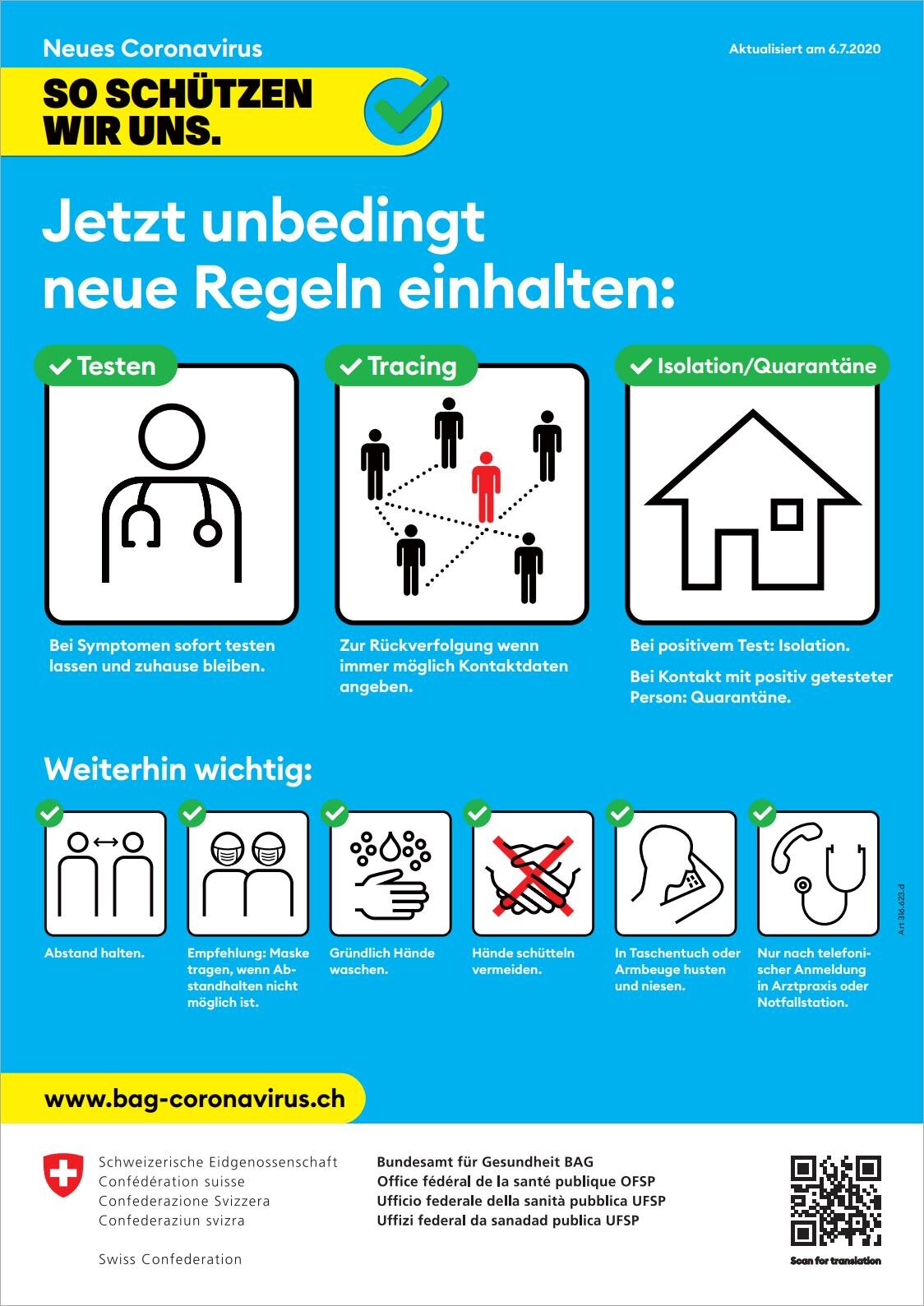
FOPH Infographic: How to Protect Ourselves.
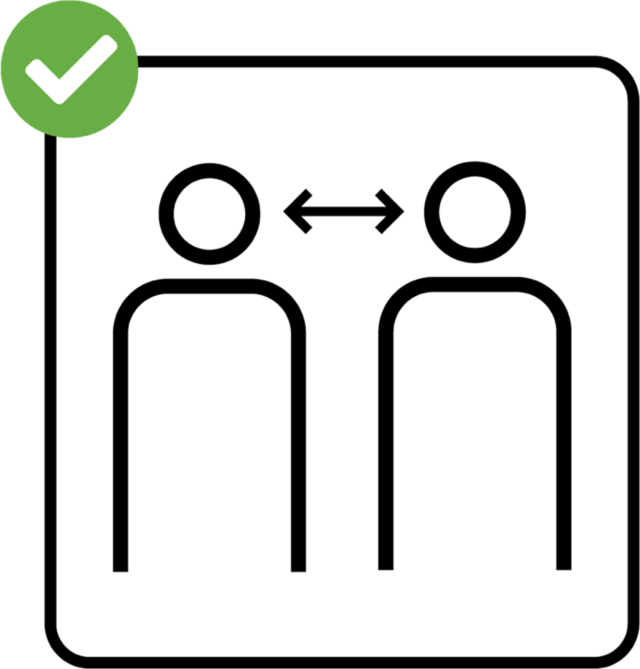
Keep your distance.
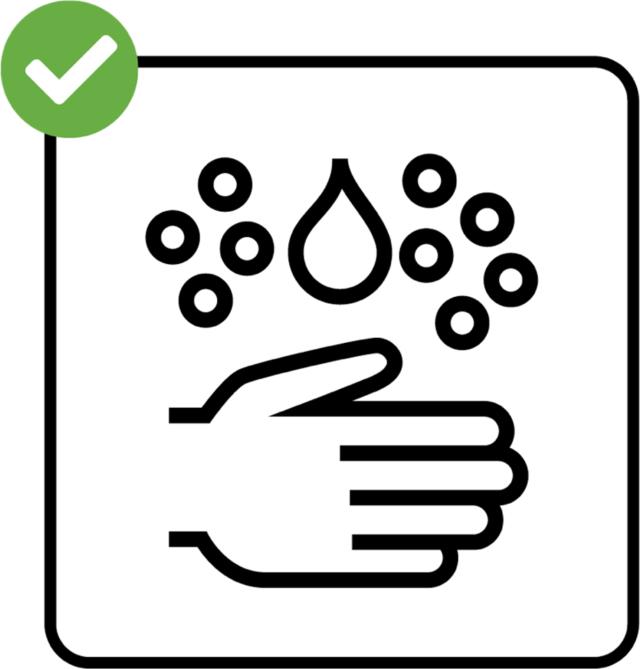
Wash your hands thoroughly.
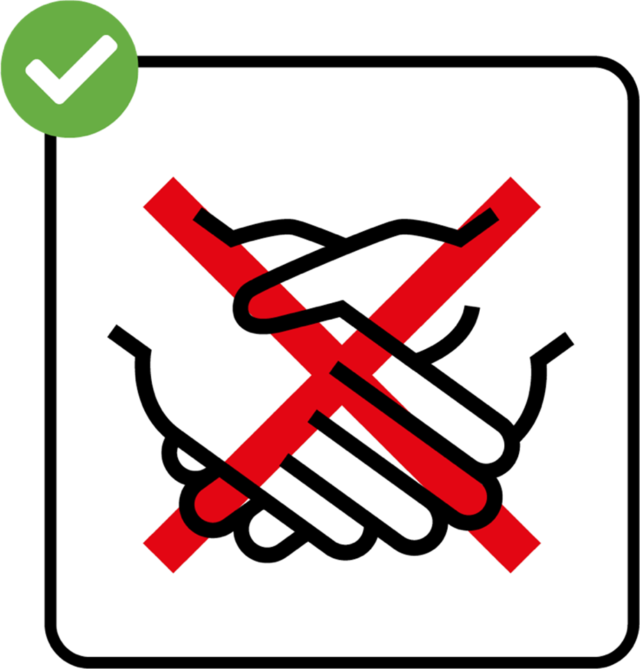
Avoid shaking hands.
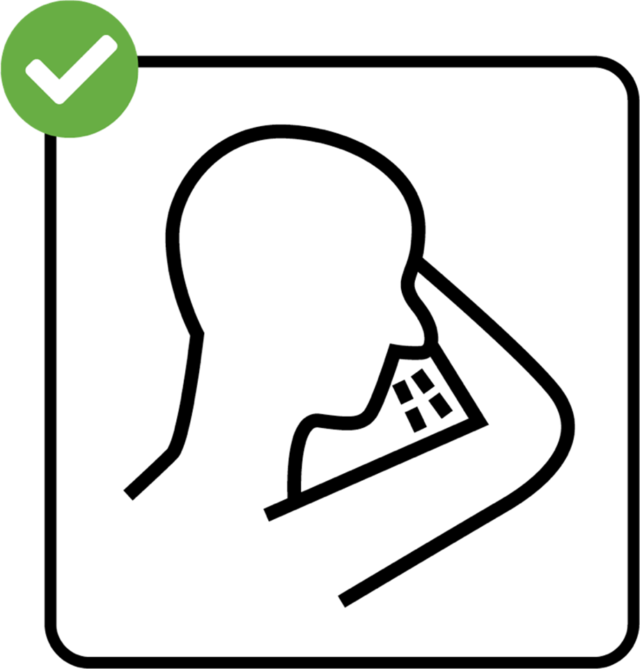
Cough and sneeze into a tissue or the crook of your arm.
Stay home if you have a fever or a cough.
Only after making an appointment by phone with a doctor's office or the emergency department.
Thanks also to B.Yoga for their help with parts of the text.