
What are backlinks?
A good SEO strategy must include backlinks, as they can influence a website’s visibility and ranking. This article explains seven tips you should keep in mind when building links.
Backlinks are links from other websites that lead to your website. They are directly related to search engine optimization. The more credible and thematically relevant the linking site is, the more valuable the recommendation can be. Domain popularity is also important—that is, the number of different domains that link to your website.
Put simply, Google works much like human recommendations: a credible recommendation carries more weight than many similar recommendations from the same source. Backlinks also help users navigate the web and can drive direct traffic to your website.
Note on the status of this article: This article was published on November 28, 2023, and was last updated in February 2025. While the basic principles remain useful, search engine guidelines and tools are subject to change. The highlighted, up-to-date notes are based on the current Google documentation.

🔗 1/ Competitive Analysis
First, figure out where you currently stand and who your competitors are. Tools like Semrush Backlink Analytics or the Linkody Backlink Checker can help you compare backlink profiles and referring domains. Traffic and authority metrics from these third-party providers are estimates and not exact Google data.
Compare yourself to the companies that rank high for your relevant search terms—that’s where you want to be.
If you’re already ranked first, congratulations: Your website likely already has a solid foundation in SEO and backlinks. Nevertheless, it’s worth checking regularly.
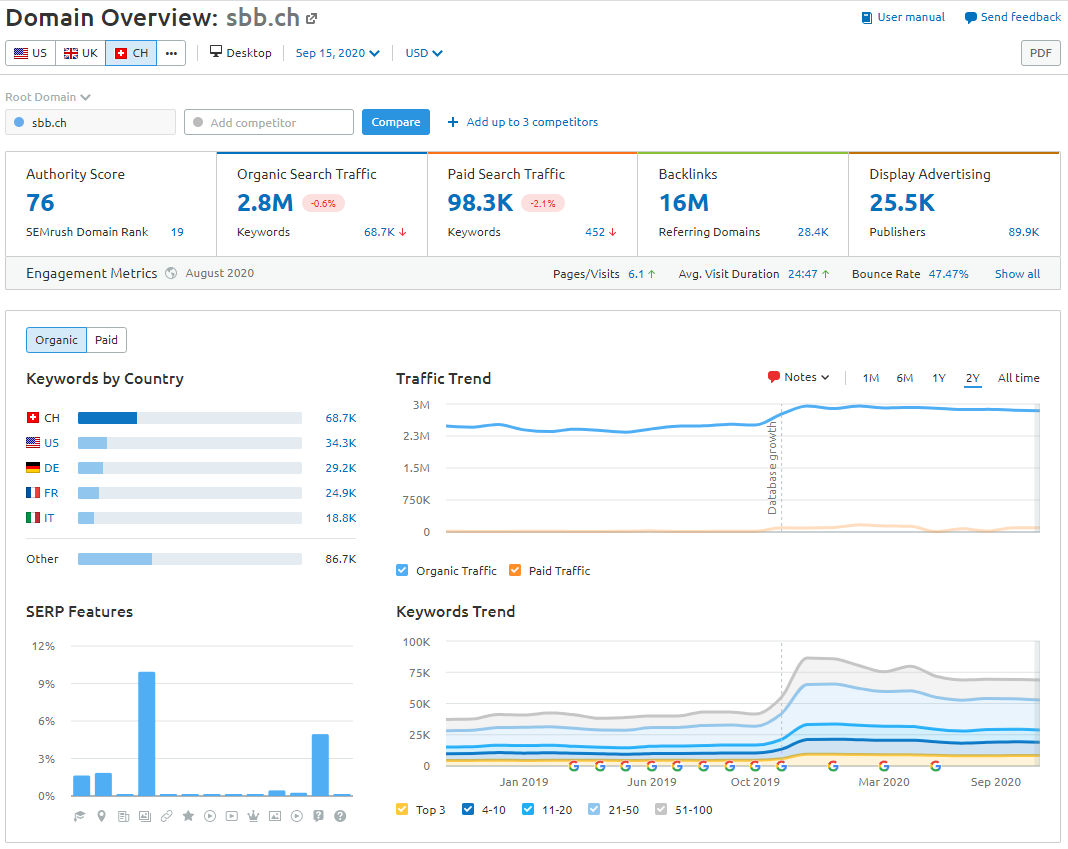
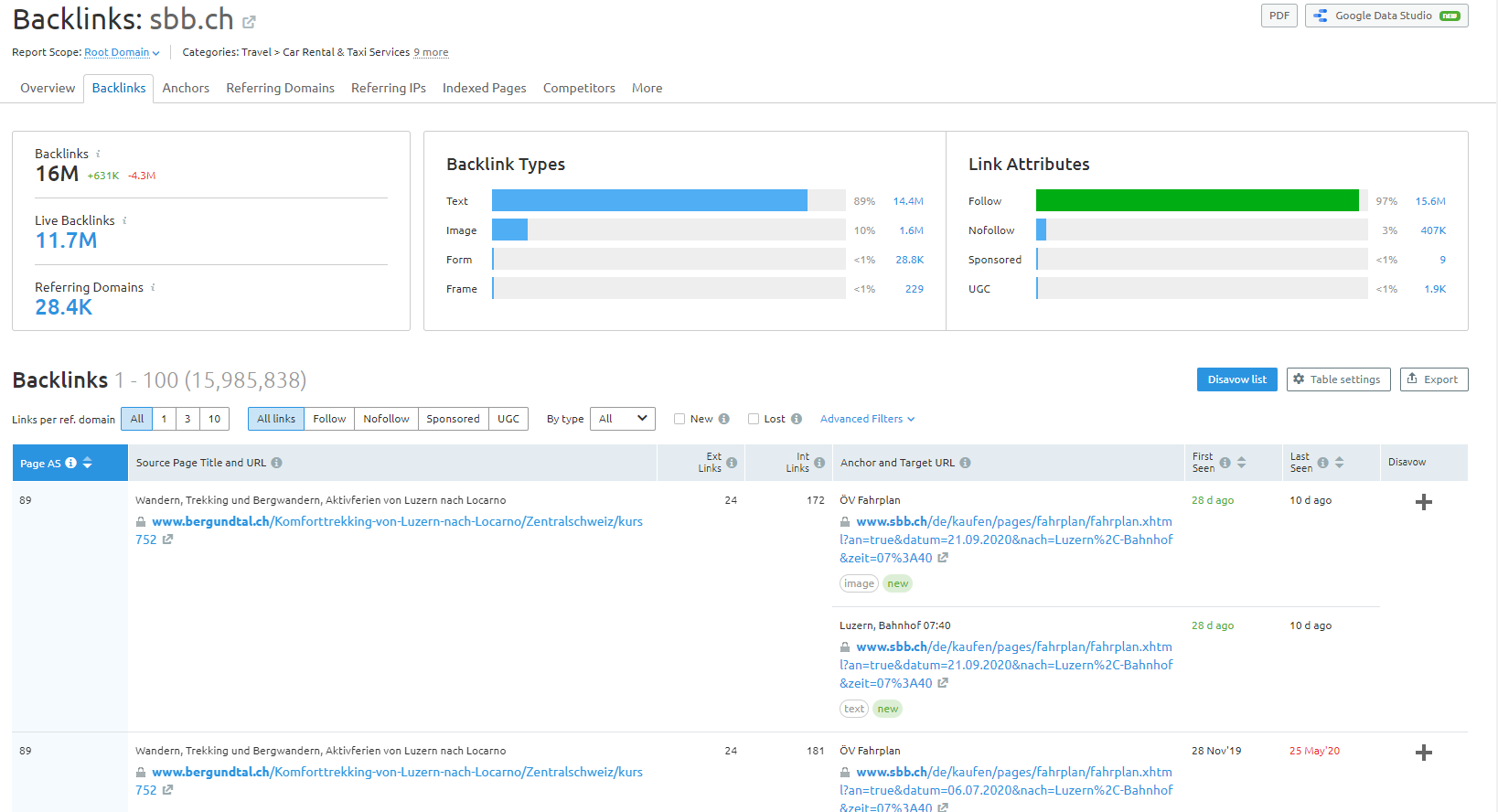
Next, assess how your existing backlinks are rated. What matters is not only the number of links, but also the diversity of referring domains, topic relevance, context, and the quality of the landing pages. Be sure to compare these same metrics for your key competitors.
🔗 2/ What Makes for Good Backlinks?
When it comes to good backlinks, quality and appropriate frequency are key. Less can be more: If the quality of the linking pages isn’t up to par, the link may be worthless or, in the worst case, pose risks.
A Trip into the Offline World:
A friend in his mid-60s, single, an insurance agent, and without children recommends a new brand of baby food to you. Does that sound credible? Hardly. Search engines use a similar approach to determine whether backlinks are thematically and contextually relevant.
Relevance can be assessed based on these factors, among others:
- Content and Trustworthiness of the Linking Domain
- Quality of the Backlink Profile
- Topic Relevance of Source and Target Content
Editorial links embedded in relevant body text are particularly useful. The anchor text should clearly describe the link’s destination and be phrased naturally.
For example, here’s how you can link to a recommended article: Online Marketing Trends for SMEs in 2020. Search engines and readers benefit from clear, relevant context.
Caution is advised when dealing with automatically generated links from any news portals, directories, or comment sections.
As a general rule, the easier it is to create a link without editorial review, the less valuable it usually is.
Editorial links from established media outlets can be valuable if there is a connection to the content. A clothing store on a car website, on the other hand, would hardly be relevant to the topic.
🔗 3/ Keep link juice in mind
It makes sense for the linking page to also cite other relevant sources. A healthy balance is important: If a page links to a large number of destinations, its attention is spread across a correspondingly large number of links.
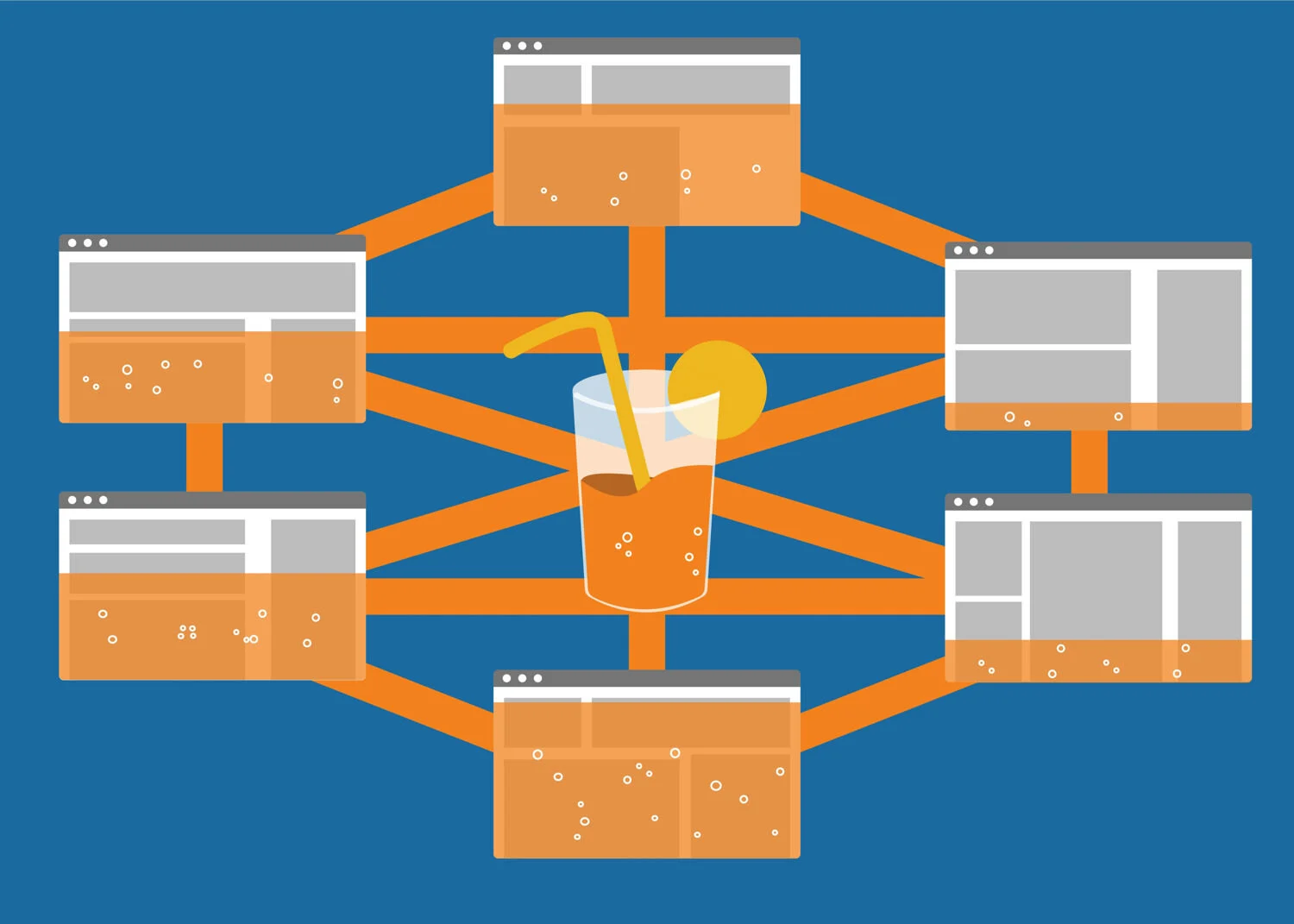
“Link juice” is a descriptive term that encompasses the signals and relevance that a page can pass on to other pages via links.
Link placement also plays a role. An editorial link within the main content is usually more helpful to readers than an inconspicuous link in the footer or sidebar. The key factor remains that the link serves a genuine purpose within the content.
🔗 4/ Follow, nofollow, sponsored, and UGC links
When it comes to links, a distinction must be made between regular links and qualified links.
Regular links do not require a special
relattribute. There are specific labels for paid placements, user-generated content, or other special relationships.
Current Google guidance: Paid placements should be marked with ` rel="sponsored" ` or, alternatively, ` nofollow `. For links in user-generated content, Google recommends ` ugc`. ` nofollow ` is intended for cases where the other values do not apply and no association with the linked page is desired. Details can be found in Google’s documentation on link attributes.
High-quality links can also drive direct traffic and boost brand awareness. Their value should therefore not be measured solely by their potential impact on search rankings.
🔗 5/ Finding Suitable Sites for Backlinks
Use competitive analysis to find relevant pages and content. Don’t just copy every link from your competitors; instead, evaluate their relevance, editorial quality, and actual value to readers.
Many SEO tools show websites that rank for key search terms, as well as domains that link to competitors. From this information, you can identify topics, publications, and partnerships where a relevant mention might be appropriate.
Simple, legitimate links often result from genuine business activities: partner sites, industry profiles, expert articles, event announcements, or company profiles. A link in your own email signature, on the other hand, is not an external backlink.
🔗 6/ Identifying Sources for Backlinks
Once you know which pages would be good places to get a mention, the actual outreach work begins. Effective link building takes time and requires compelling content.
The most effective approach is to address them personally and clearly: Explain the editorial value your content brings to the landing page and its audience.
This requires good content—hence the term “content marketing.” Some website operators demand financial compensation. However, such agreements must not be used as a covert means of manipulating search rankings.
Current Google Note: Buying or selling links to manipulate rankings is considered link spam. Advertising and sponsorship are permitted if the links are marked with rel="sponsored" or nofollow. See Google’s spam guidelines on link spam.
Websites belonging to business partners, customers, and suppliers can also be useful sources, provided that the link fits the editorial context and remains transparent.
The same applies to pages from your personal network: What matters is not the relationship itself, but rather a clear connection to the topic and the value it provides to readers.

🔗 7/ Remove Bad Backlinks
When building links, you should avoid manual actions and other consequences of unnatural links. Artificially created links, low-quality pages, and link spam are particularly problematic.
SEO tools can flag suspicious links, but their risk assessments do not represent decisions made by Google. If you have self-created links that are actually problematic, try to have them removed first.
Current Google Note: The Disavow tool is an advanced tool and is not recommended by Google for most websites. It is primarily intended for use when there are a large number of artificial or low-quality links and a manual action has been taken or is likely to be taken. Incorrect use can negatively impact search performance. Be sure to read the official Disavow Guidelines beforehand.
Google can demote many low-quality links on its own. Therefore, start by monitoring Search Console, manual actions, and verifiable changes rather than hastily excluding entire domains.
Conclusion
Google, Bing, and other search engines are constantly evolving and continuously updating their systems.
For this reason, your backlink and SEO strategy must also be reviewed and adjusted on a regular basis.
Link building is a long-term, ongoing process. It requires a strategy that includes competitive analysis, compelling content, genuine relationship building, and ongoing quality control.
Backlinks alone do not guarantee successful SEO. What matters most is a comprehensive strategy that combines helpful content with proper on-page and off-page optimization.