
More Successful with Artificial Intelligence 🏆
The use of AI technologies such as ChatGPT can give small and medium-sized businesses a decisive competitive advantage. When used wisely, they boost productivity, reduce costs, and foster new creative ideas. This article shows how companies can make strategic use of ChatGPT.
Note on the status: This article was published on November 23, 2023, and reflects the state of development and discussion at that time. AI features, product names, and data rules change rapidly. Before use, please review the current information provided by the respective vendor and the guidelines issued by the EDÖB.
Historical information from the 2023 article; original source citations are not available.
How much does a person use AI each day?
Projected daily AI usage for 2025
Swiss SMEs are turning to AI
SMEs are incorporating AI into their budget planning
Opportunities for Swiss Companies
Swiss companies showed increasing interest in artificial intelligence in 2022. However, the Swiss AI Report from that time showed that SMEs were lagging somewhat behind in its adoption: One-quarter were not yet using AI at all, and only about one-fifth had a firmly established AI strategy.
Three-quarters of the companies surveyed planned to increase their investments over the next three years. At the same time, only just under half of the companies were focusing on employee training and education. Because AI systems are evolving very rapidly, SMEs should begin building these skills early on.

What is ChatGPT?
ChatGPT is an AI assistant developed by OpenAI. It responds to prompts and, depending on the features currently available, can work with text, images, and code, among other things. This makes it a useful tool for numerous business applications.
How can small and medium-sized businesses use AI?
ChatGPT works with queries or instructions, known as prompts. The more clearly the task, context, target audience, format, and quality criteria are defined, the more precise the response will be.
Content Creation ✍️
ChatGPT can generate drafts for blog posts, social media posts, or product descriptions. Companies should review the results for editorial accuracy and tailor them to their brand, target audience, and the facts.
Brainstorming 💡
ChatGPT can provide variations, perspectives, and initial concepts for products, marketing campaigns, or events.
Learning and Continuing Education 🧠
As an interactive learning tool, ChatGPT can answer questions on a wide range of topics and help users build their knowledge. Statements of a technical nature should be verified using reliable sources.
Market Research 👀
AI can help structure existing market information, formulate hypotheses, and prepare competitive analyses. It is no substitute for robust primary research.
Product Feedback 📢
ChatGPT can cluster anonymized or shared customer feedback and identify themes and potential areas for improvement.
What are the benefits of ChatGPT?
Depending on the process, available data, and technical implementation, ChatGPT can offer SMEs a variety of benefits:
- Available around the clock: Automated assistants can pre-structure inquiries even outside of business hours.
- Efficiency: Employees can prepare texts, summaries, and draft responses more quickly.
- Customer Satisfaction: Quick response times and consistent answers can improve customer service.
- Personalization: Using permissible and appropriate data, content or recommendations can be tailored more closely to specific situations.
- Scalability: Recurring tasks are easier to manage as the volume increases.
Challenges in Using AI
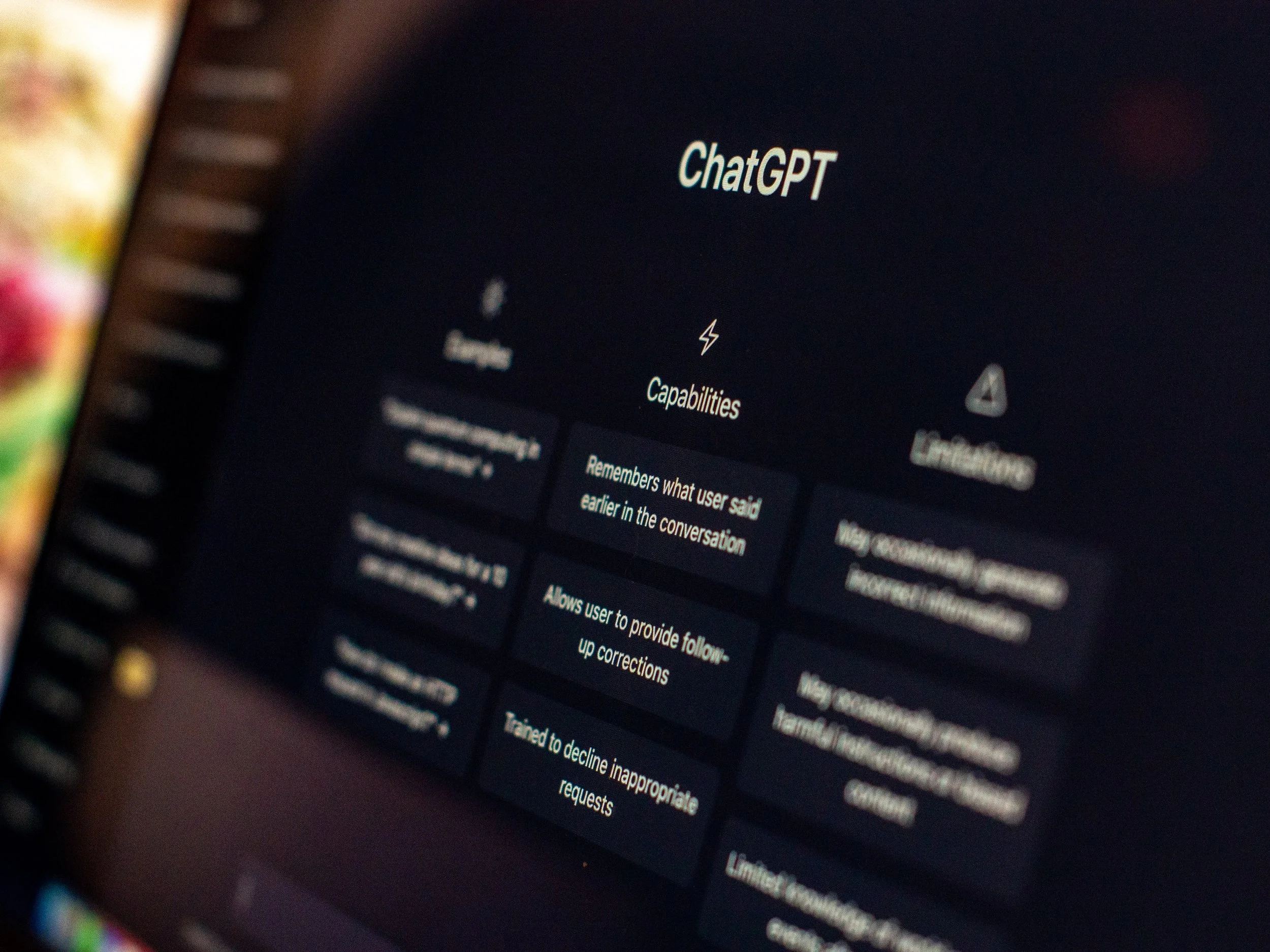
AI can have a significant impact on business processes, but it requires careful oversight. Results are not guaranteed to be accurate or error-free; language models can generate information that is plausible but fabricated. Therefore, any business-related output must undergo a professional review.
Data protection, copyright, information security, and the protection of trade secrets are particularly important. Do not enter any confidential or personal data into a system if the purpose of use, legal basis, contract, storage location, and data controls have not been clarified.
How to Use ChatGPT
- Open ChatGPT: Use the current interface at chatgpt.com and select a suitable plan.
- Write a clear prompt: Describe the task, context, objective, target audience, and desired format as clearly as possible.
- Start the interaction: Enter the prompt and review the first response.
- Adjust and refine: Add any missing context or clarify the instruction.
- Experiment: Compare different phrasings and approaches.
- Apply Results: Revise, verify, and label content according to its purpose.

ChatGPT and Data Privacy
The Swiss Data Protection Act applies directly to AI-based processing of personal data. Among other things, companies must explain in a transparent and understandable manner what data is being processed, for what purposes, and in what manner. The FDPIC recommends a mindful approach to AI applications.
Current Note on ChatGPT Data: For services intended for individual users, OpenAI may use content to improve its models, provided that the relevant data control has not been disabled. In ChatGPT, this can be disabled under “Data Controls”; temporary chats are not used for training. According to OpenAI, input and output data for ChatGPT Business, Enterprise, and the API are not used for training by default. Nevertheless, please review the terms and conditions applicable to your account and avoid sharing personal or business information that is not authorized for disclosure.
Historical Context: Italy 2023
On March 30, 2023, the Italian Data Protection Authority issued a provisional order restricting processing. At that time, it specifically cited:
- insufficient information
- Lack of a legal basis for certain processing activities
- Possible inaccuracies in the personal information provided
- missing age verification
These points related to the GDPR. The Swiss Data Protection Act is not a carbon copy of the GDPR; therefore, the Italian ruling at that time could not be applied to Switzerland as is. Our article “nDSG vs. GDPR” offers an in-depth comparison.